A Summary by Savannah Sanders
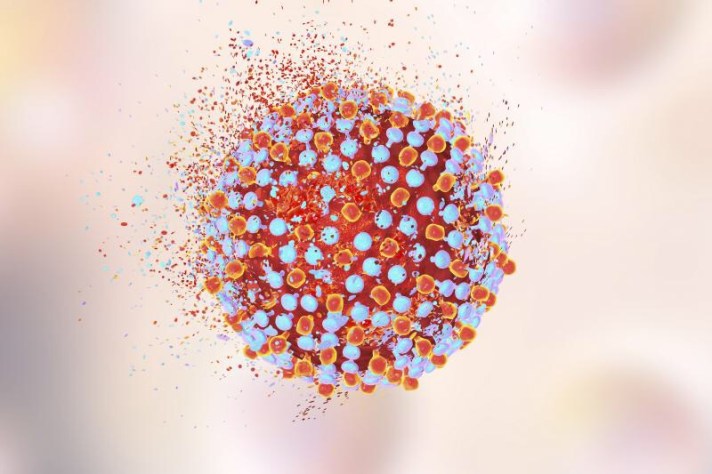
Photo by Monash University
In January 22 to March 23, 2018 a health department in Washington was notified about two patients that had just recently receive a diagnosis of acute hepatitis C virus (HCV). Both patients had never participated in risky behavior that could cause hepatitis C, but both where recently injected with an opioid drug from the same nurse during their separate visits to the emergency room at their local hospital. One patient was in the ER on December 6th and the other December 16th 2017. With some investigation, it was found that the nurse had accessed the automated drug dispensing system more frequently then other nurses in the same department. The nurse admitted to using these injectable opioid drugs and antihistamine drugs for her own personal use. This nurse did test positive for HCV antibodies on March 19, 2018, but did not have HCV RNA.
With further investigation, both specimens taken from the patients had genetic testing from the CDC and a HCV viral variants test found that both patients had genetically similar HCV. This indicates that these patients source of infection was in fact related.
The first patient was a 60-year-old man who was visiting the ER for abdominal pain on December 6, 2017. He receives an injectable narcotic from two nurses. The patient then reputed to the same ER on January 12th, 2018. The patient had a history of jaundice and his test results done in the ER that day showed elevated liver enzymes and he tested positive for anti-HCV and HCV RNA. In December 2016 this same patient had a HCV blood test for routine screening and it was negative. The two nursed who had dispensed the narcotic injection had used an automated drug dispensing system and in the systems log, both nurses withdrew over the amount of aloud narcotics from the system during February 2018. On March 19, 2018 one of the nurses (nurse A) was tested for anti-HCV using an immunoassay test, which was positive, and tested negative for HCV RNA using a real time reverse transcription-polymerase chain reaction test. A week later she tested positive for HCV RNA. Her levels of HCV where less that’s the lower limit of detection of 15 IU/mL, to low for viral sequencing. This nurse admitted to using patient’s injectable drugs for her own personal use while working in the ER department. The other nurse (nurse B) tested negative for anti-HCV using an immunoassay test. Both of the nurses tested negative for HIV and Hep B.
The second patient was a 50-year-old women who came into the same ER, on December 16, 2018. She had a complaint of neck pain and nurse A gave the injectable narcotic drug. This patient returned back to the ER on March 23, 2018 with jaundice and tested positive for anti-HCV and HCV RNA.
The CDC Division of Viral hepatitis, genetically sequenced and phylogenetic analyzed both the ER patients. The CDC states that “a high degree of similarity in nucleotide sequence (>96%) between HCV variants sampled from two persons indicated a common source of transmission (3,4). Both patients had HCV genotype 1a that was >96% similar. (CDC, 2019) The CDC could not compare the nurse’s sample because her titters where to low.
By November 1, 2018 1,863 of 2,762 patents where tested for HCV, HBV and HIV infections including 175 of the 208 patients what where treated by nurse A. Out of the 175, 20 patients tested positive for anti-HCV or HCV RNA. 13 of the 20 patients had a HCV genotype 1a that was >96% similarity. 1,688 patents had no record of treatment by nurse A, 65 patients tested positive for anti-HCV or HCV RNA and where not genetically related. Non of the screened patients tested positive for HIV or HBV. No other health care providers in the ER where offered testing and no other health care providers gave treatment to the 13 patients with genetically similar HCV infection.
This HCV infection was likely to occur because of unsafe injection practices during the treatment of narcotic drugs by a health care provider. Other cases of unsafe injection practices have been reported that HCV transmission has been caused by a health care provider injecting themselves with the narcotic then refilling the syringe with water and injecting that into the patient. These cases where also investigated and found the HCV found in each patient was generally similar.
Reference
Njuguna HN, Stinson D, Montgomery P, et al. Hepatitis C Virus Potentially Transmitted by Opioid Drug Diversion from a Nurse — Washington, August 2017–March 2018. MMWR Morb Mortal Wkly Rep 2019;68:374–376. DOI: http://dx.doi.org/10.15585/mmwr.mm6816a3.
Photo Credit: Monash University, https://www.rdmag.com/news/2017/05/hepatitis-c-researchers-uncover-potential-new-therapeutic-targets
 Health is Savvy