A Summary by Savannah Sanders
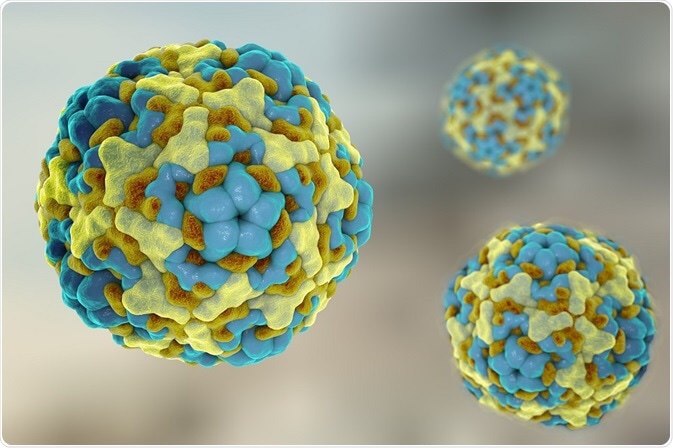
Image Credit: Kateryna Kon / Shutterstock
Enterovirus D68 (EV-D68) is a virus that is associated with acute respiratory illness (ARI). In fall of 2014 an outbreak of Enterovirus as reported. Previously, EV-D68 was rarely reported to the CDC. In the United States, the common times of reported cases of EV-D68 was during late summer and early fall. EV-D68 epidemiology is not generally understood because most of the cases of EV-D68 are not reported to the CDC. So, for the CDC to gain more knowledge of the epidemiology of EV-D68, they activated surveillance among pediatric patients in seven U.S medical centers though the New Vaccine Surveillance Network (NVSN). The investigation focused on emergency departments by testing and detecting EV-D68 in patients that show symptoms of ARI. The CDC reported “at all NVSN sites during July 1–October 31, 2017, and the same period in 2018. Among patients with ARI who were tested, EV-D68 was detected in two patients (0.8%) in 2017 and 358 (13.9%) in 2018. Continued active, prospective surveillance of EV-D68–associated ARI is needed to better understand EV-D68 epidemiology in the United States.” (CDC, 2018).
The NVSN did testing in medical centers children and teens under the age of 18. The preformed mid-turbinate nasal and/or oropharyngeal swabs to detect EV-D68 in patients that showed signs of ARI using a validated real-time reverse transcription–polymerase chain reaction assay. In Nashville and Pittsburgh, the NVSN facilities tested directly for EV-D68. Whereas, Cincinnati, Houston, Kansas City, Rochester, and Seattle tested for enterovirus (EV) and rhinovirus (RV) first. Then is they received a positive EV or RV test, they would test for EV-D68. EV-D68 tests where delegated by age, year, month, sex, and admission status.
The preliminary results for the data collected was reported by the CDC that 2 out of 2,433 patients tested positive for EV-D68 in 2017 and 358 out of 2,579 patients in 2018. In 2017, one patient was hospitalized in Huston who was originally evaluated in the emergency department. In 2018, a’’ seven sights had positive tests for EV-D68 and 242 of 358 patients were hospitalized. The CDC states that “EV-D68 was detected in 9.2% of patients with ED visits for ARI and 18.3% of hospitalized patients with ARI. Approximately half (169; 47.2%) of the 2018 EV-D68 detections occurred in September”. (CDC, 2018) The peak of detection was varied depending on the sight, Cincinnati and Kansas City peaking in late August through September, Houston, Pittsburgh, and Rochester peaking in mid September, and Nashville and Seattle peaking in October. The median range of patients who tested positive was three years of age with 211 being males.
During 2018 cases of positive EV-D68 patients increased dramatically compared to 2017. European countries also reported an increase in the number of EV-D68 cases. EV-D68 is associated with ARI, but previous reports suggest that EV-D68 can also be associated with acute flaccid myelitis (AFM). AFM is a neurological condition that has symptoms of flaccid limb weakness. As of March, 2019 the CDC has reported 223 cases of EV-D68 with symptoms of AFM with a peak of AFM symptoms starting in September 2018. Whereas, in 2017 only 35 cases of EV-68 with symptoms of AFM was reported. The CDC announce their limitations with this study that “First, this report describes EV-D68 testing within NVSN during July–October of each year, but additional cases likely occurred outside this period in 2018. Therefore, the results might not be representative of the entire EV-D68 season. Second, NVSN sentinel surveillance sites are geographically varied, but might not be representative of all regions of the United States.” (CDC, 2018)
Kujawski SA, Midgley CM, Rha B, et al. Enterovirus D68–Associated Acute Respiratory Illness — New Vaccine Surveillance Network, United States, July–October, 2017 and 2018. MMWR Morb Mortal Wkly Rep 2019;68:277–280. DOI: http://dx.doi.org/10.15585/mmwr.mm6812a1.
 Health is Savvy